The work was exhaustive. I have read that “burnout” is the defining issue for my generation, and my last role was a textbook case. So when the layoff came, it was supposed to be a crisis. Instead, it was a release.
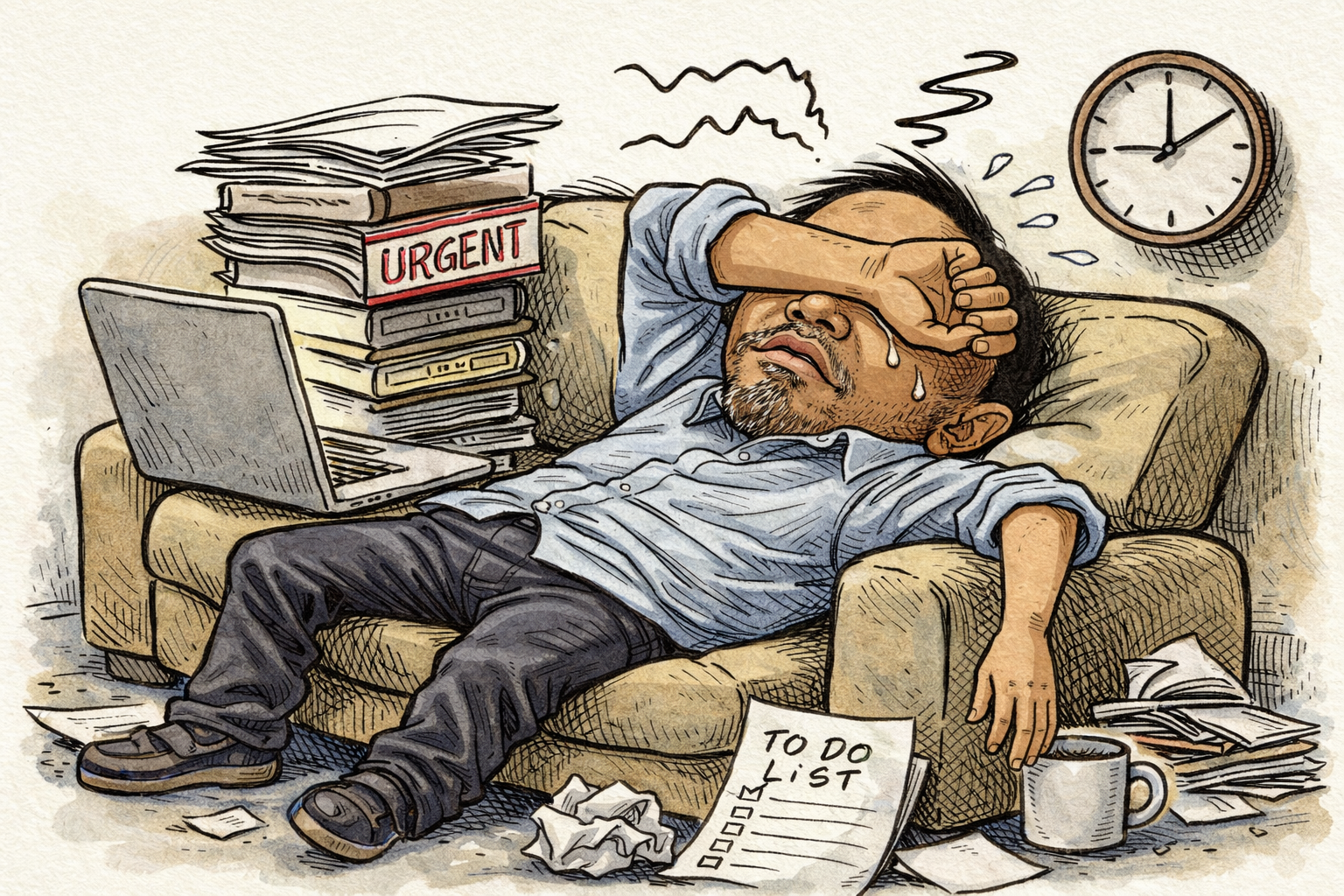
I was strangely glad it happened right as Thanksgiving and the Winter Solstice were approaching.
I didn’t stress.
I cooked, I grilled, and perfected my steak.
I played with the kids.
I fixed stuff around the house.
I ate crabs in Baltimore.
I slept (except on school days, because the bus still arrives entirely too early.)
The silence was a gift. I am technically reporting for unemployment, but mostly, I am taking it easy. And from this distance, the noise of the last few months finally looks like data.
The Paradox of Preventive Work
Modern software teams are designed to reward the visible. They prioritise the noise of collaboration over the silence of completion.
We have built an entire ecosystem of work that validates presence rather than outcome. Meetings reward the people who speak the most, regardless of the value of their contribution. Code reviews reward small, digestible diffs, even if the underlying architecture remains rotten. Roadmaps reward the declaration of intent – the “we plan to” – over the messy reality of what is actually finished.
The system notices “disruption” instantly. A broken build, a merge conflict, a disagreement in a stand-up – these trigger immediate alerts. But the ‘system’ seldom notices the problems that do not happen. It lacks the sensor for the bug that was preemptively squashed, the technical debt that was silently paid down, or the crisis that was averted because someone was looking where they weren’t supposed to.
I have stood on the receiving end of this dynamic more times than I care to count.
There is a specific condition that breeds this conflict: asymmetric ownership. It happens when one person holds the keys to an entire domain. While the rest of the team interacts with that domain episodically – perhaps dipping in for a quick feature or a review – the owner lives there. Context accumulates unevenly. Decisions that are obvious to the owner look abrupt and arbitrary to everyone else.
I recall a conflict over a code formatter. The context was simple: I was the sole frontend engineer in a team of backend specialists. The frontend repository was a mess of inconsistent styles and ignored linting errors. I made a command decision to standardise it using Prettier.
Technically, it was a mechanical trade-off. There would be one moment of review pain in exchange for permanent formatting stability. But that is not what the team saw. They saw a “disruptive” pull request that touched every file in the repository. They saw a frontend engineer making a unilateral decision that complicated their afternoon. I justified myself by looking at the lifetime of the project; they judged me by the inconvenience of the day.
My mistake was not the code. My mistake was underestimating how invisible my reasoning was to everyone else. When you are deep in the domain, you forget that others are only tourists. Teams feel disruption keenly, but they do not feel the absence of future debates. Invisible labour, when it works, looks like nothing.
My mistake was underestimating how invisible my reasoning was to everyone else.
This dynamic escalates when the stakes are higher than code formatting.
Consider a recent scenario involving a “Tale of Two Backends.” We had an Old Backend (Node.js) running in production and generating revenue. We had a New Backend (Go microservices) that was the team’s “main focus” but remained unfinished and unstable. And then there was my assigned domain: a complete Frontend Redesign and migration to Material UI.
The system was misaligned. The backend team was fully occupied with the unfinished Go architecture, leaving the production environment to rot. Meanwhile, I had completed my frontend assignment. The redesign was polished, the migration was complete, and the deployment was successful.
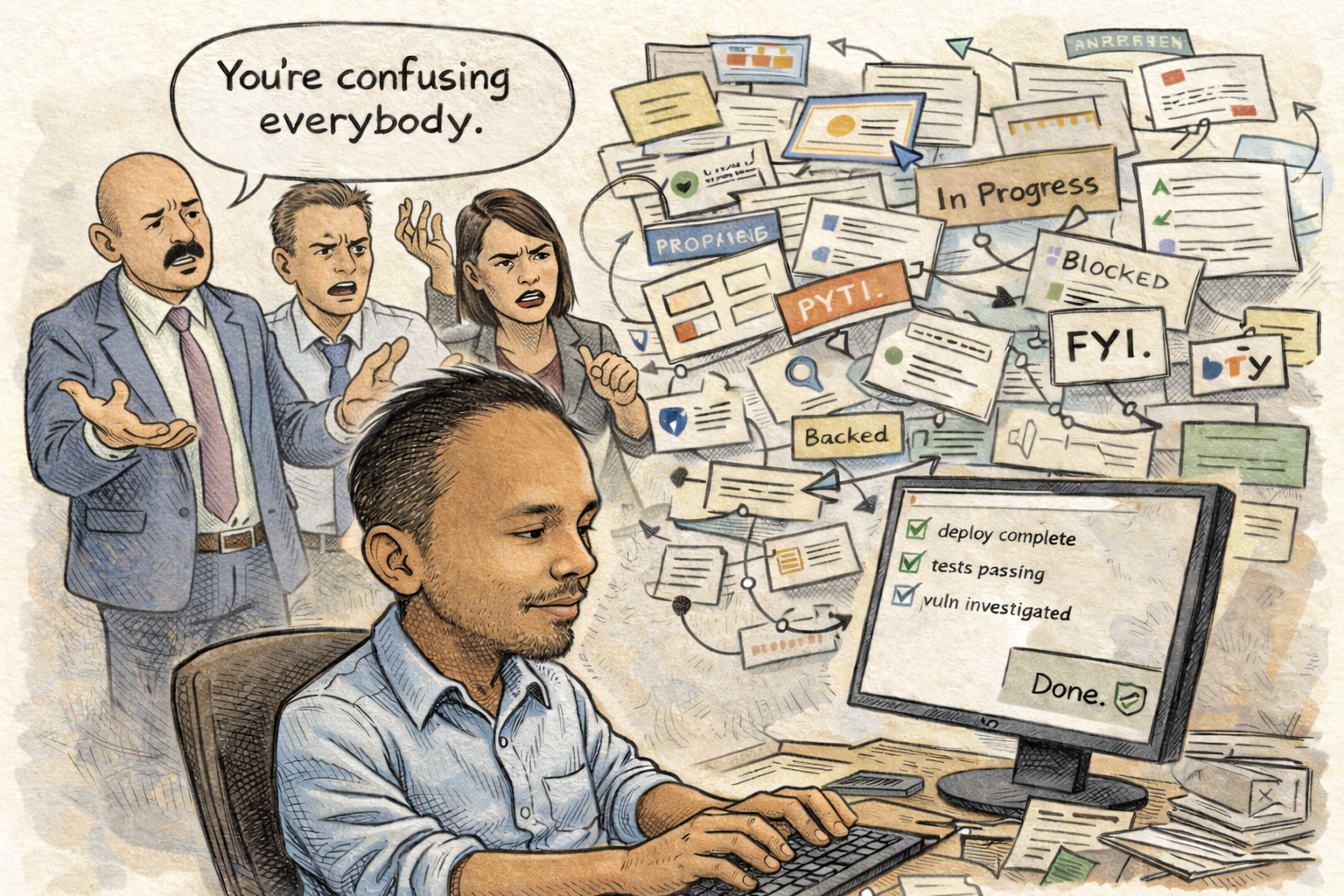
With my primary task finished, I looked at the production backend. It was lighting up with vulnerability warnings. Since the rest of the team was fully absorbed in the Go migration, I stepped in to diagnose the issue, thinking I could map out a fix. I mentioned this exploration aloud.
That was the spark. I was not thanked. I was yelled at.
The Product Manager pulled me into a call and berated me. He claimed I was “confusing everybody” by working on the backend. He shouted that I was supposed to be completing a minor deployment – a routine patch involving the old Node.js backend and the frontend.
He did not ask if the preparation was finished. He assumed it wasn’t. He yelled at me for failing to do a job that was already done. The steps were complete; nothing was delayed. I was utilising the wait time before the final release. He saw a dereliction of duty.
The conflict here was not about competence; it was about the hierarchy of visibility. I had violated the cardinal rule of asymmetric systems: I moved faster than the communication chain could track. In a culture that values status updates over status realities, finished work becomes invisible, while unauthorised exploratory work becomes suspect.
Silence creates a vacuum, and authority fills it with assumptions.
There is a rich irony in being lectured on “assumptions” by a manager who assumes negligence before verifying completion. But that is the nature of the beast. When intent is not broadcast on a megaphone, it is misread as defiance.
Moving Forward
The lesson here is not that I should stop fixing things. It is that high-agency individuals require explicit interfaces. Without one, we are indistinguishable from chaos.
I am not going to slow down, and I am not going to seek consensus for problems I am qualified to solve alone. But I am adding a translation layer.
First, I must replace silence with signalled intent. The distinction is in the phrasing: not “May I look at the backend?”, but “I am investigating the vulnerability for sixty minutes.” This is critical. It is not a request for permission; it is a broadcast of coordinates. It removes the surprise without sacrificing the agency.
Second, I must bound the uncertainty. By naming the time-box, I turn an open-ended threat into a contained experiment. The team fears an indefinite distraction; I give them a defined operation.
In a hierarchical system, silent correctness is indistinguishable from defiance. The outcome does not matter if the method looks like a mutiny. I will no longer make the mistake of assuming my results will speak for themselves. They won’t. They need a narrator.